FundraiseMore
Live product
I turned a fundraising fee calculator into a website check and a way to get the fixes done.
A fundraiser choosing a platform needs a way to compare real requirements. A fundraiser improving a site needs a list of changes worth making. I designed those public tools alongside the private workspace that carries an engagement from first conversation to delivery.
Case notes
For nonprofit fundraisers choosing a giving platform or fixing a donation journey, and for me as the operator who scopes, bills and delivers the work.
Why it exists
- Find the actual obstacle
- A fundraiser needs to know where a donor might get stuck, what the public pages show, and which steps still need someone to test them.
- Choose a platform
- The fee calculator I started with could estimate a gift’s cost. A fundraiser also needs to know whether a plan supports the giving and integration features they depend on.
- Carry a fix through
- After the diagnosis comes discovery, scope, acceptance, payment and a handoff. I needed a record that would follow the engagement across those steps. Bookings on a secondary calendar also went unseen by my meeting tools and never reached the workspace.
- Run it from one place
- I was running sales, quoting, billing and delivery from a different tool each. What I learned in discovery did not follow the deal into scoping, quotes were accepted and paid in separate places, and delivery had no single record.
What I decided
- Show the basis for a finding
- I put evidence and a next step beside each finding. I send uncertain cases to a manual check and rank platforms by documented feature fit, using estimated cost per gift as the tiebreaker.
- Give the finding a next step
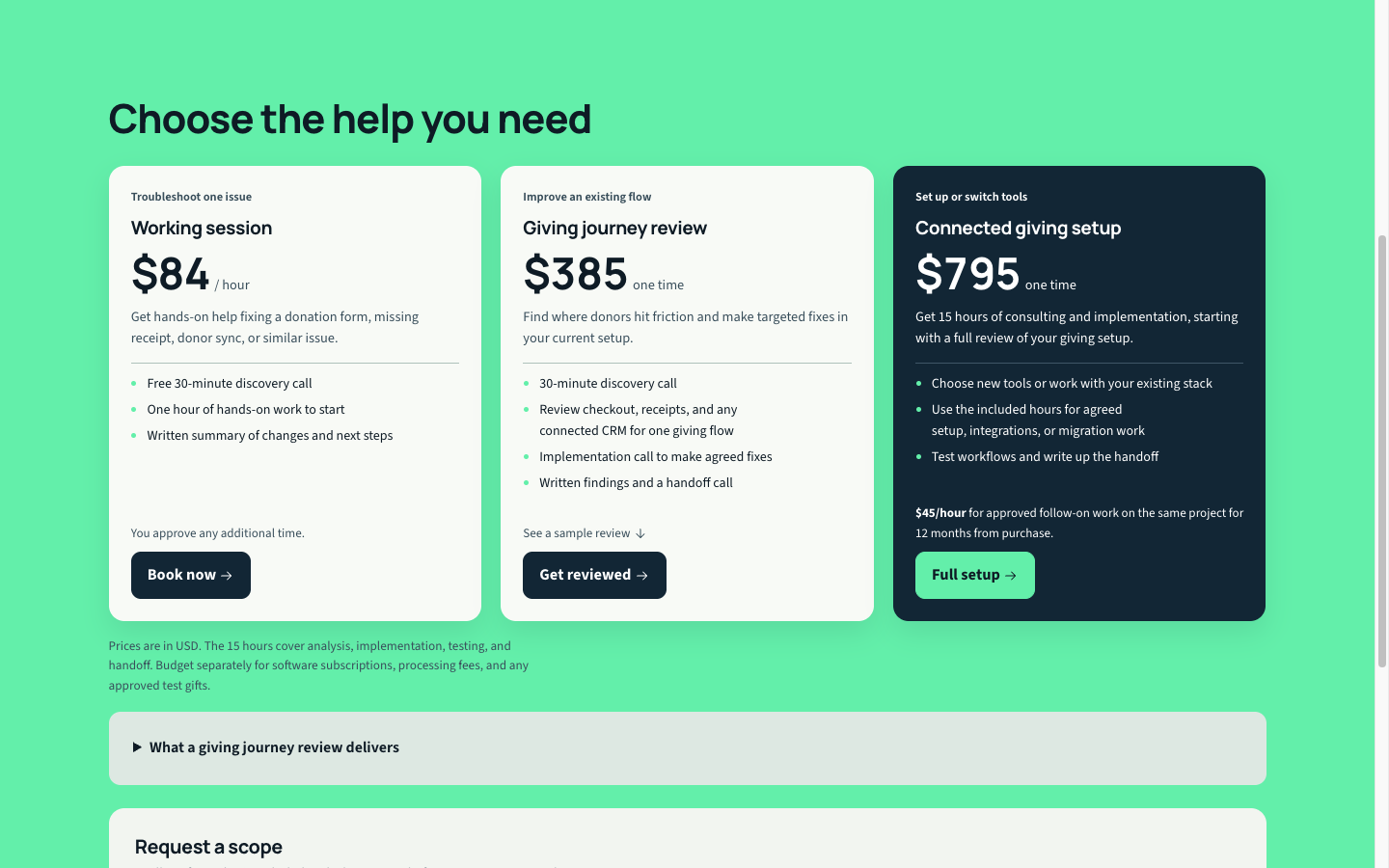
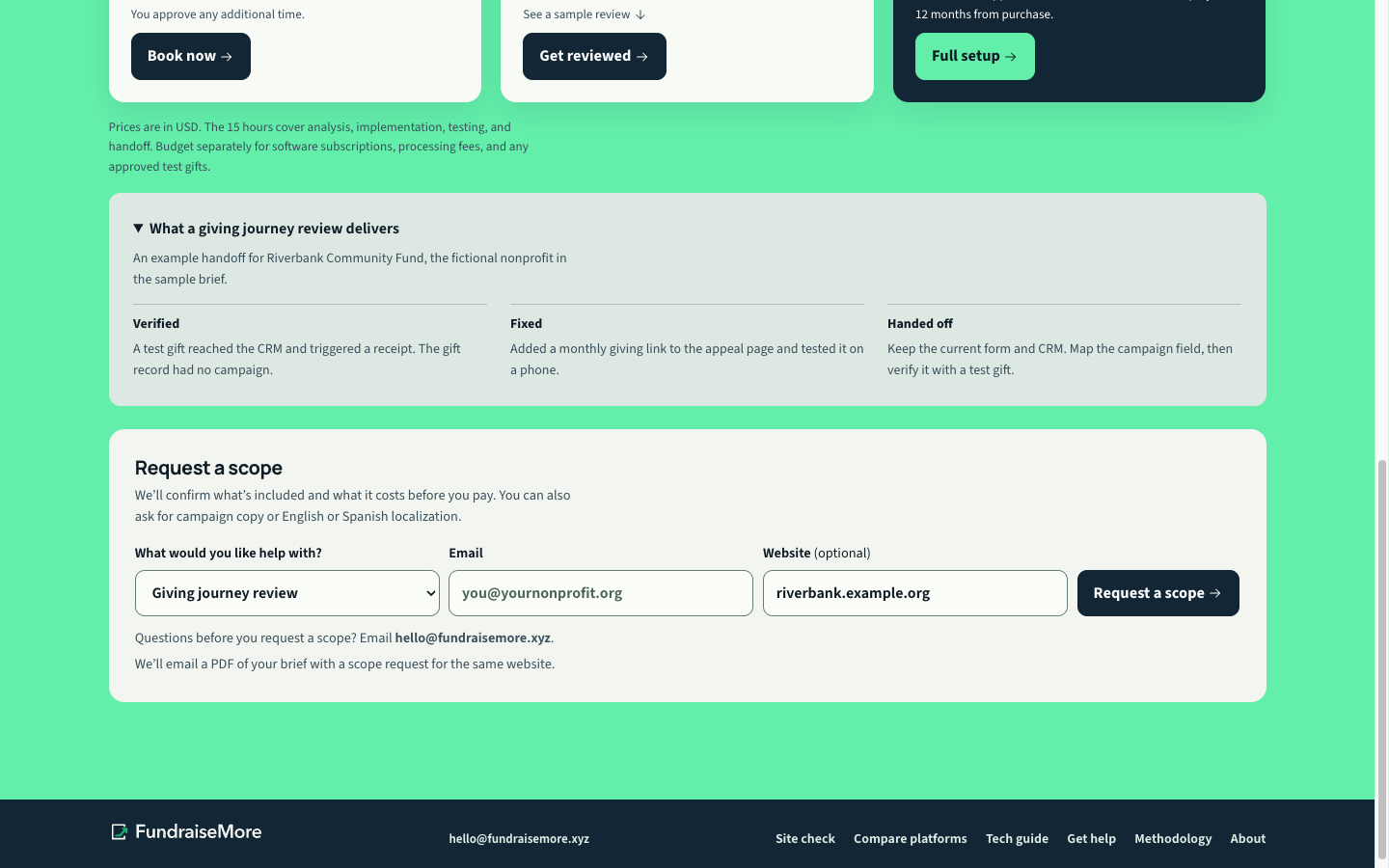
- I offered priced working sessions, giving journey reviews and connected giving setups. I kept a scope request and a discovery call for work that needs a conversation first.
- Keep acceptance and payment distinct
- A signed quote fixes what the client accepted. Stripe events record money received, including later balance payments, while access to client records is granted separately.
Follow Riverbank Community Fund, a fictional nonprofit, from the first check to the handoff.
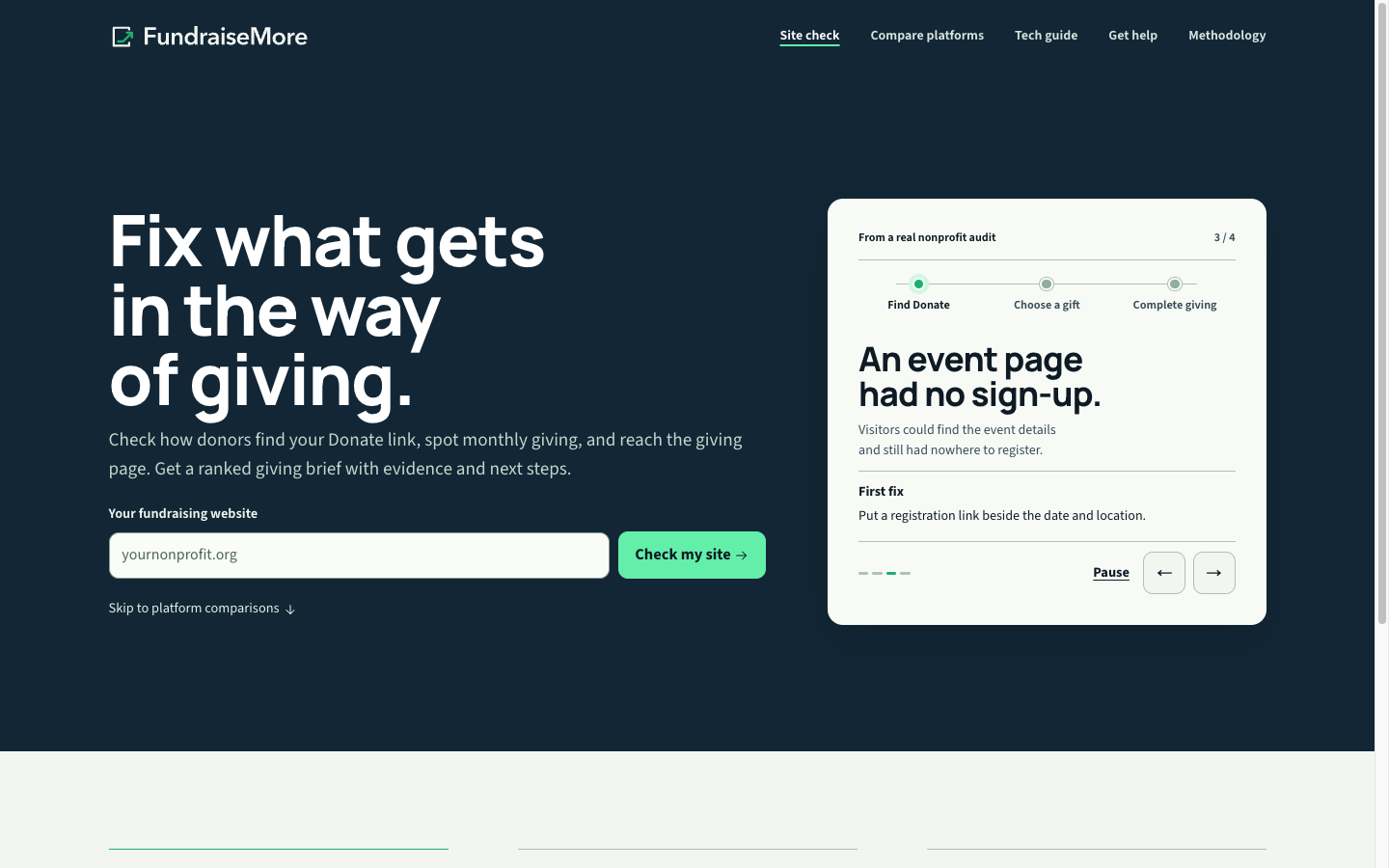
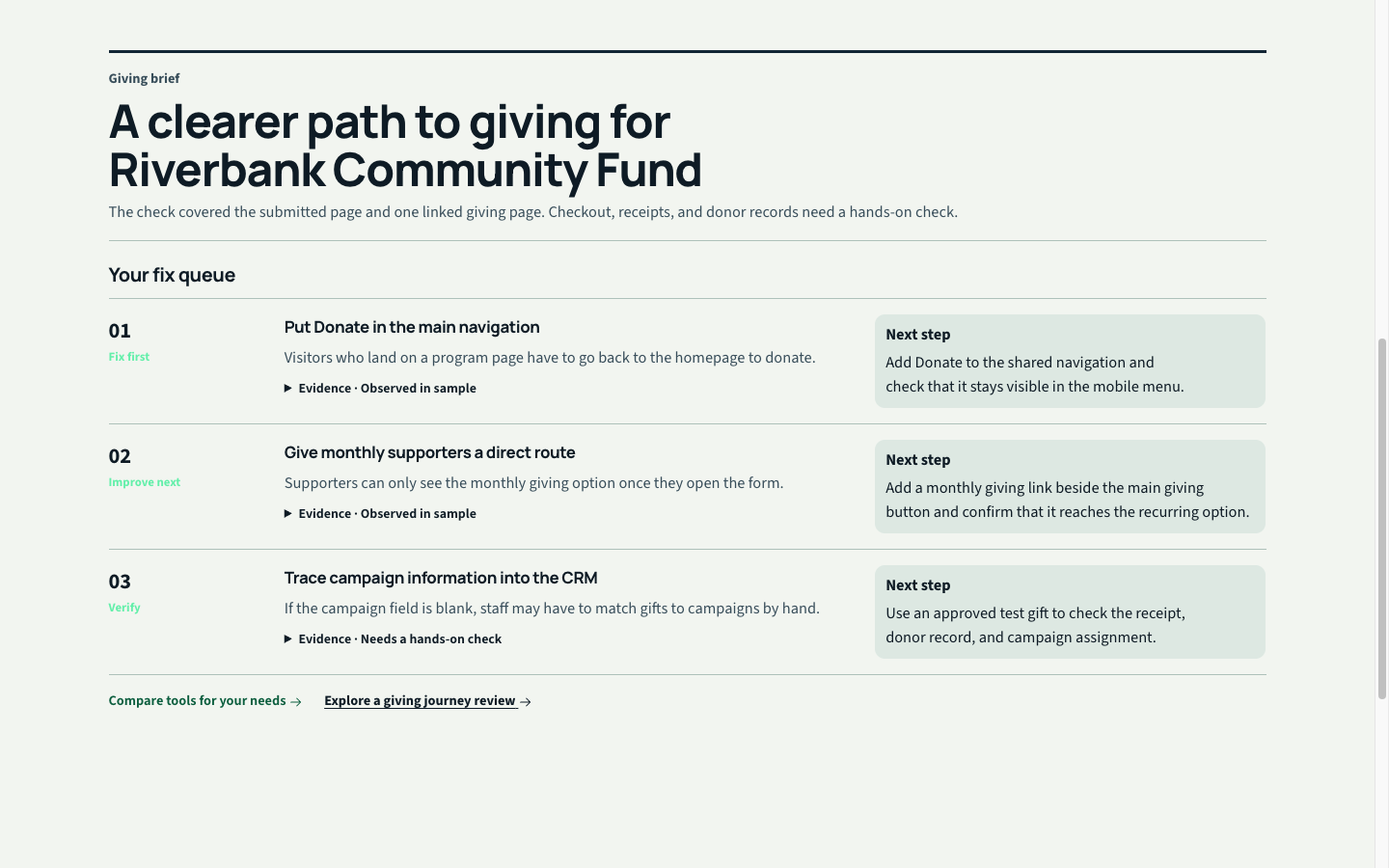
- Check the public site
- Riverbank enters its website. The brief surfaces what to fix first, what to improve next and what to verify, with the page evidence and a suggested next step. I mark steps such as the actual checkout experience for a manual check when the public scan cannot establish them.
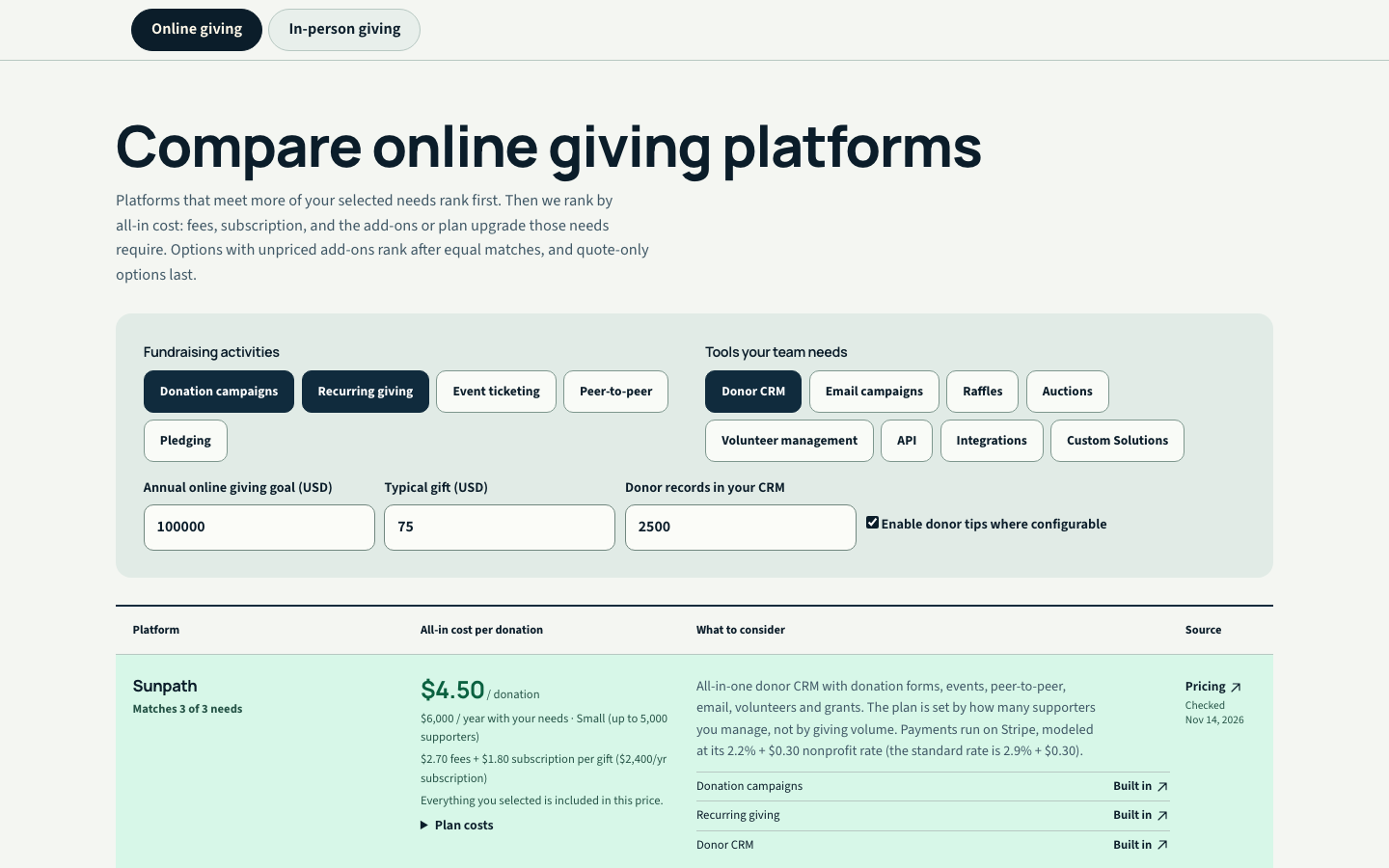
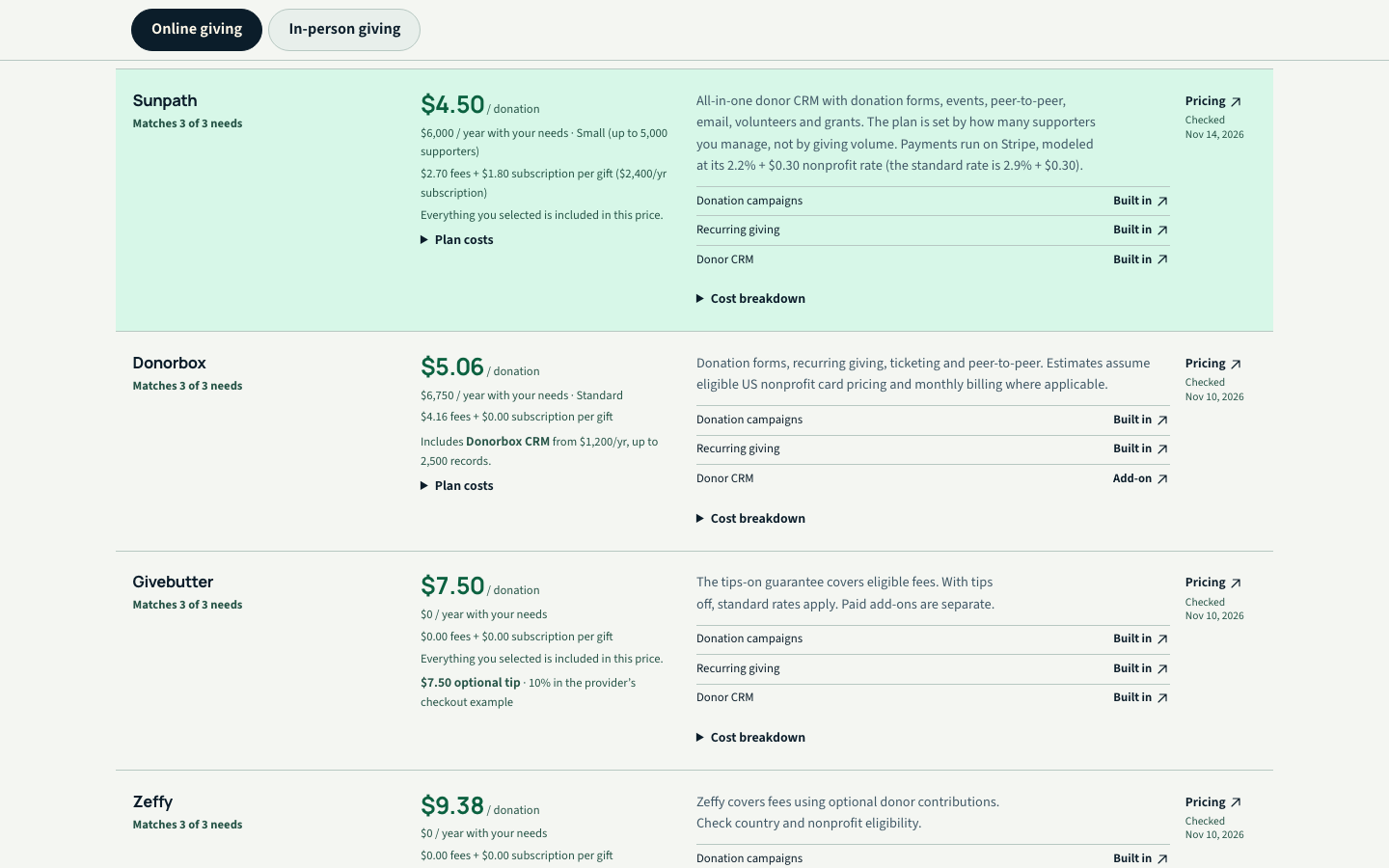
- Compare the tools
- Riverbank picks requirements such as recurring gifts, pledging or an integration. The comparison ranks plans by documented fit, then by estimated cost per gift. Each result shows the cost assumptions, plan, sources and date checked.
- Choose the next step
- Riverbank can pick a working session, a giving journey review or connected giving setup. For a broader job, a scope request or discovery call gives me the context to recommend a scope.
- Book and follow up
- I built a scheduler so the meeting lands on the host’s primary calendar, where the meeting and recording tools look for it. A confirmed booking also lands in the operator overview, where I can see replies and other follow-ups.
- Review and sign
- I issue a quote with a revision history, the scope, what is due on acceptance and the remaining balance. The nonprofit reviews and signs before paying. The signed PDF records the version they accepted.
- Record each payment
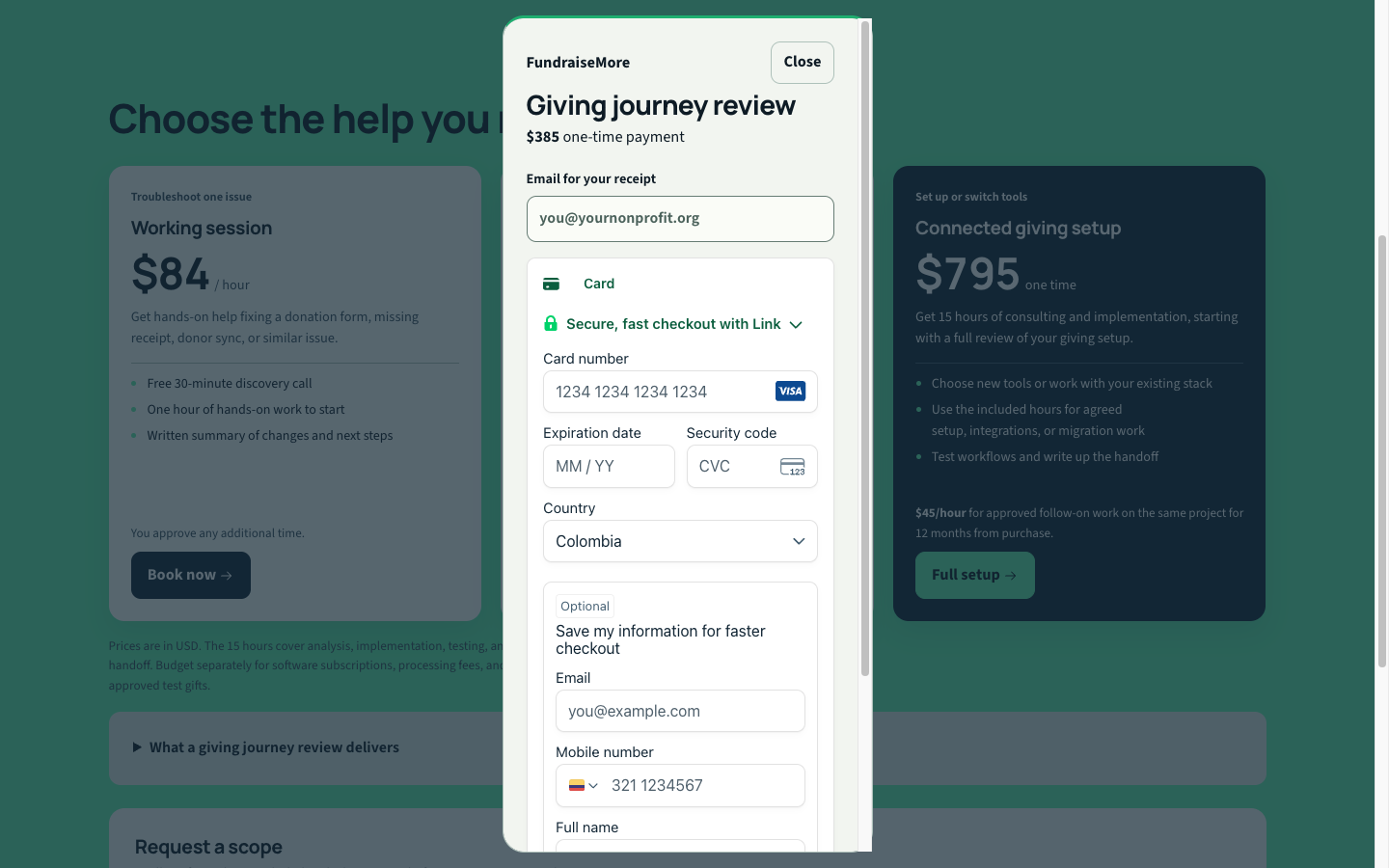
- Stripe records money through payment events, including when someone closes checkout before returning. I can issue a separate balance request from the deal and track it against the signed quote.
- Deliver and hand off
- I track work, time and deliverables and prepare a written handoff of what I verified, what changed and what to do next. The client signs in by email to see what their grants make available on the first Home.
Shortcuts I turned down
- A simulated scan or a vanity count
- I start the check on submission and keep each finding tied to evidence. I left an unmeasured usage badge out.
- A cheapest-first ranking
- Cost matters after a platform can do the job. Cost per gift breaks ties and shows its assumptions, including charges or tips where they apply.
- A generic contact button at every step
- Priced offers let a fundraiser choose a defined job. Discovery is available when the site, integration or scope still needs a conversation.
- Forking a full scheduling product
- The immediate job was one host, the primary calendar and a booking record the workspace could use. I built that scope in-house to avoid maintaining a larger fork.
- A single payment status
- A signed quote fixes the agreement. Separate payment records let a deposit and balance each be received and followed up.
- Opening the operator workspace to clients
- I built client access around explicit grants. The operator keeps the private record, and the client Home shows the areas they have been invited into.
What’s in place
- Public tools
- Website check and ranked fix brief, platform comparison with assumptions and source dates, service offers, scope requests and embedded booking.
- Deals and billing
- The operator workspace collects leads, replies and bookings. It keeps quote revisions and signed PDFs, records Stripe payments and lets me request a balance on the signed quote.
- Delivery and client access
- The private workspace tracks projects, work items, time and deliverables. Clients book and manage calls through the scheduler, review, sign and pay a quote online, pay a later balance request, sign in by email to a first Home that shows what they have been granted, and receive report links I can revoke.
- Pricing research
- Comparison prices carry sources and check dates. A monitor flags changes on providers’ pricing pages so I can review the assumptions against fresh evidence.
- Follow-up and reminders
- The workspace can surface new replies and upcoming calls alongside deal work. Checkout link reminders and separate payment records give me a place to follow up on the next outstanding step.
Still in progress
- Client space
- A wider billing and delivery portal inside the client space is still to come.
Need to connect a customer journey to the systems behind it?